
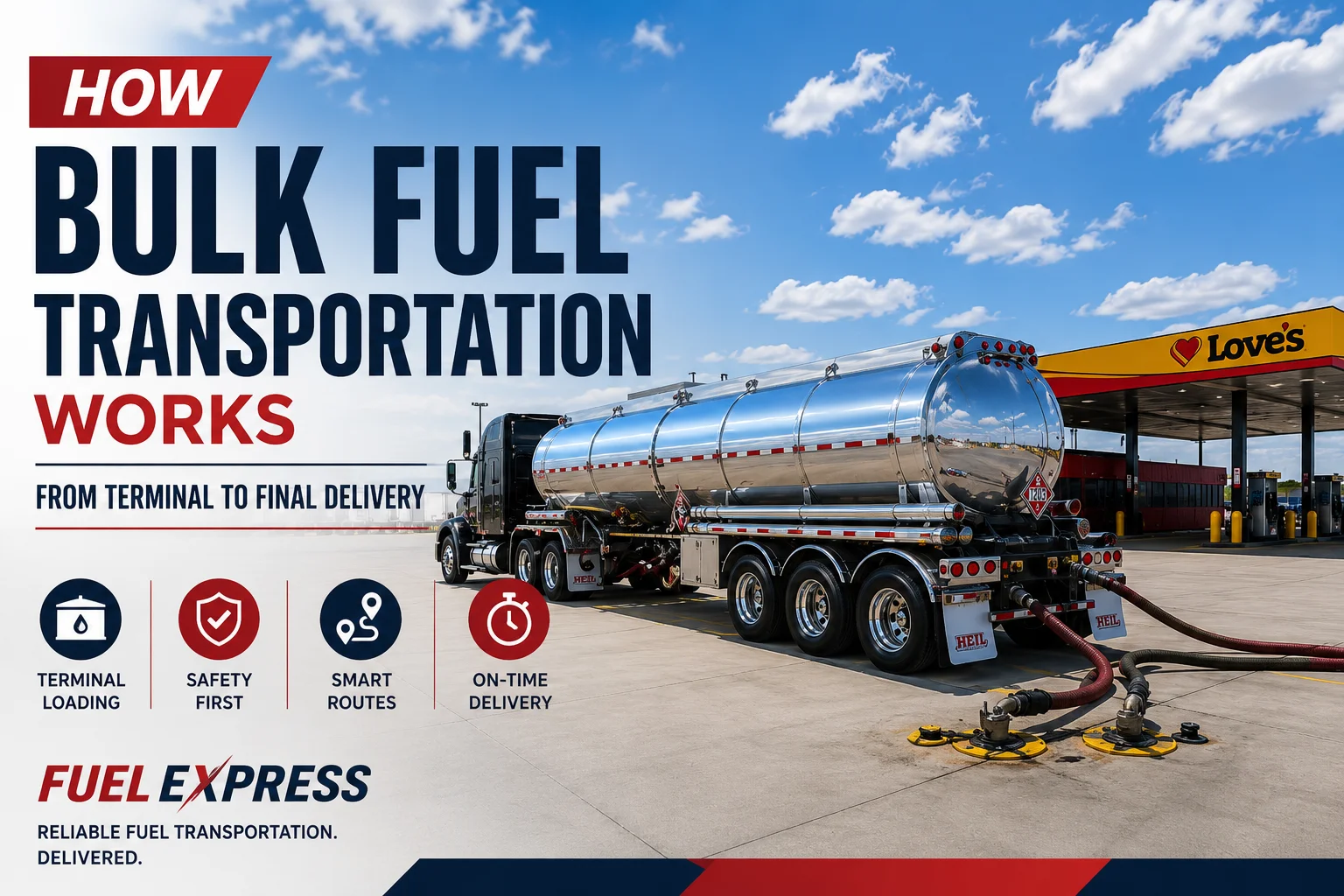
How Bulk Fuel Transportation Works From Terminal to Final Delivery
Every day, millions of gallons of fuel are transported across the United States to support gas stations, industrial facilities, commercial fleets, and fuel suppliers. While most people see tanker trucks traveling down the highway, few understand the complex logistics required to move fuel safely and efficiently from a terminal to its final destination.
Bulk fuel transportation is one of the most important components of the nation’s energy infrastructure. From terminal loading to final delivery, every step must be carefully coordinated to ensure safety, compliance, and reliability.
The process begins at a fuel terminal where gasoline, diesel, and other petroleum products are stored after arriving from refineries through pipelines, rail systems, or marine transportation. Fuel carriers coordinate with terminal operators to schedule loading times and prepare deliveries based on customer requirements.
Before loading can begin, drivers conduct thorough inspections of their trucks and tanker trailers. Tires, brakes, lights, valves, hoses, and emergency equipment must be inspected to ensure everything meets federal safety requirements. These inspections help reduce risks and ensure equipment is ready for the road.
Once inspections are complete, fuel is loaded into specialized tanker compartments. Modern tankers often feature multiple compartments, allowing different fuel products to be transported during the same trip. This improves efficiency while helping customers receive multiple fuel types in a single delivery.
Transportation planning is another critical step in the process. Dispatch teams evaluate delivery schedules, weather conditions, traffic patterns, customer priorities, and route restrictions. Companies with strong long-haul transportation capabilities can effectively manage deliveries across multiple states while maintaining consistent service levels.
Safety remains the highest priority throughout every delivery. Fuel transportation companies must comply with regulations established by the Department of Transportation (DOT) and Federal Motor Carrier Safety Administration (FMCSA). Drivers receive specialized hazardous materials training and follow strict operating procedures designed to protect customers, communities, and the environment.
Technology has also transformed the fuel transportation industry. GPS tracking, fleet management software, and real-time communication systems provide dispatchers with visibility into vehicle locations and delivery progress. These tools improve efficiency while helping customers receive accurate delivery updates.
Upon arrival at the delivery location, drivers follow detailed unloading procedures. Fuel types are verified, receiving equipment is inspected, and all connections are secured before product transfer begins. Careful attention during unloading helps prevent contamination and ensures product quality.
Reliable fuel transportation is essential because businesses depend on uninterrupted fuel supplies. Delays can affect retail fuel stations, industrial operations, commercial fleets, and emergency services. That’s why many companies rely on professional transportation providers that offer comprehensive fuel logistics solutions alongside transportation services.
At Fuel Express, we are committed to providing dependable transportation services throughout the Western United States. Through modern equipment, experienced drivers, and a focus on safety, we help customers maintain reliable fuel supply chains regardless of market conditions.
If your organization requires dependable fuel transportation services, contact Fuel Express today to learn how our team can support your fuel delivery needs.